
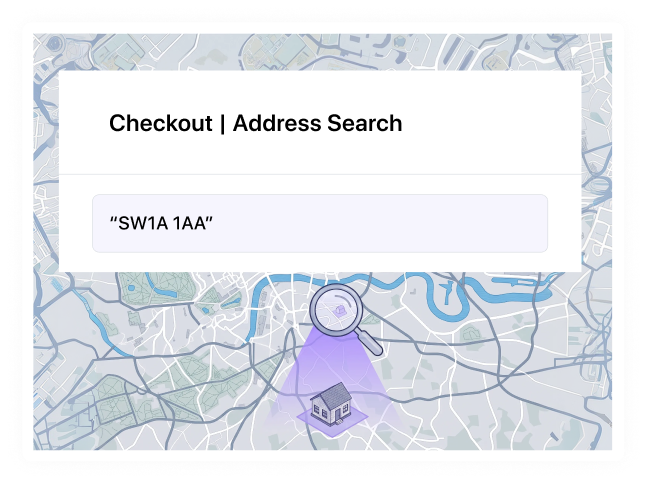
A brief case study hidden in the Financial Ombudsman Service's advice on insurance pricing grievances will be instantly familiar to most personal lines teams.
When detailing how policy quotes can end up using inaccurate details, the Financial Ombudsman highlights a primary culprit: missing data forces insurers to rely on assumptions. A classic example in home buildings cover is using a property's postcode to estimate its bedroom count when the exact figure isn't known.
Far from being an enforcement action or a headline-grabbing scandal, this is simply a realistic overview of daily rating engine operations, cited directly by the Ombudsman as a frequent driver of consumer complaints.
Relying on a postcode is not inherently flawed, as underwriting naturally relies on inference and postcodes serve as a valid data point. However, problems quickly arise whenever the underlying address data is incomplete or inaccurate.
What the Ombudsman actually says
That bedroom count example doesn't sit in isolation, as the Ombudsman lists two routes to incorrect pricing information: an assumption made because the relevant detail wasn't available, and calculation or human error, such as entering the wrong postcode. Both of those errors come back to the address.
The same pattern shows up again in the Ombudsman's guidance on underinsurance. Describing online sales, it notes that some application forms auto-complete fields to suggest an answer, using the consumer's postcode and bedroom count to estimate a rebuild cost and fill it in for them, and that answers given on a comparison website are often pre-filled into the insurer's own form to save the consumer repeating themselves.
Its concern is that the process gives consumers the impression they don't need to double-check what's been suggested or pre-filled. So the regulator's own description of a normal UK quote journey is 'address in, assumption out, consumer nudged not to check it.’
The assumption is only as good as the address underneath it
Rating engines don't really price postcodes. They price properties, and they find these properties by matching an address against flood, subsidence, crime, rebuild, and property attribute datasets.
When the address resolves cleanly, the match happens at the property level. When it doesn't, the match degrades to the next broader geographic unit, and in the UK that's the postcode. AddressBrain's own coverage figures show that 1.8 million postcodes span across 32 million delivery addresses, resulting in an average of roughly 18 properties being treated as interchangeable.
For a terraced street built in one go, this is a reasonable approximation, but for a postcode covering a converted block of flats, a detached house and a new development, it isn't. And the applicant never sees which one they got.
New builds are where the address is most likely to be missing
When a development completes, the local authority creates the addresses through its street naming and numbering function, and Royal Mail allocates the postcode and adds the properties to the Postcode Address File. Insurers running their own address tables refresh them on their own cycle, which is rarely the same day.
Within that delay, the physical property and address exist, and the applicant is right there, yet the system fails to recognise them. Depending on the design of the quote flow, applicants might face an administrative rejection, be directed to an unstructured text field, or have a plot number entered into a field that will never correspond to a recognised address. Every one of these outcomes leads to a policy priced for something other than the actual property.
"The customer typed it wrong" is a weaker defence than it looks
When a pricing complaint reaches the Ombudsman, it looks at whether the information used to set the premium was correct at the relevant time and, if not, whether the errors were caused by the insurer. Insurers sometimes argue the mistake was the customer's, and the Ombudsman handles those cases under its separate approach to misrepresentation and non-disclosure.
That's a real route, but it's a narrower one than teams often assume, and it gets narrower still when the journey did some of the work for the customer. On underinsurance, the Ombudsman says explicitly that it will look at how clear the online journey was, particularly where consumers are expected to double-check pre-filled information, because that can be unclear or misleading.
If your form accepted a free-text address or offered a near-match the applicant reasonably assumed was validated, you own more of that outcome than the misrepresentation route will carry.
What it costs once a complaint lands
Where the Ombudsman finds a pricing mistake, it checks whether the customer lost out, which may mean asking the insurer to reprice the policy with the correct details. Where there's a loss, it expects the difference refunded with interest, and it will consider whether an award for distress or inconvenience is appropriate on top of that.
The higher cost is usually the process: the Ombudsman asks for the policy schedule, contact records, underwriting information, and a premium calculation breakdown, which means a third party reading your rating logic to determine whether a bad address caused the price. This is an expensive way to discover that a checkout field was accepting anything typed into it.
Five things to check in your own quote journey
- Can the applicant select their address, or do they type it? If there's a free-text box anywhere in the journey, that's where the mispriced policies come from.
- What happens when the postcode isn't in your table? Find the fallback path and follow it. If it ends in manual entry or a decline, you have a new-build problem.
- What does the rating engine actually receive? Structured fields, or one string another system has to parse.
- Where does the aggregator hand-off leave the address? Pre-filled answers carry forward. So do pre-filled mistakes.
- What about MTAs and renewals? The address is re-entered at both, usually on a different screen with different validation.
Where AddressBrain fits
AddressBrain ensures the address your property data is matched against is a real, current, correctly formatted Royal Mail PAF address, returned as structured fields rather than a string, including addresses created recently enough that your own table hasn't caught up. The assumption layer above it stays exactly as your underwriters designed it - it just stops running on a postcode when it could have been running on a property.
Start with the free trial that includes 30 lookups a day for 30 days with no card required, or read more about how we work with insurers and MGAs.